Blog
The Origin of Bak Kut Teh and How It Became a Malaysian Delicacy
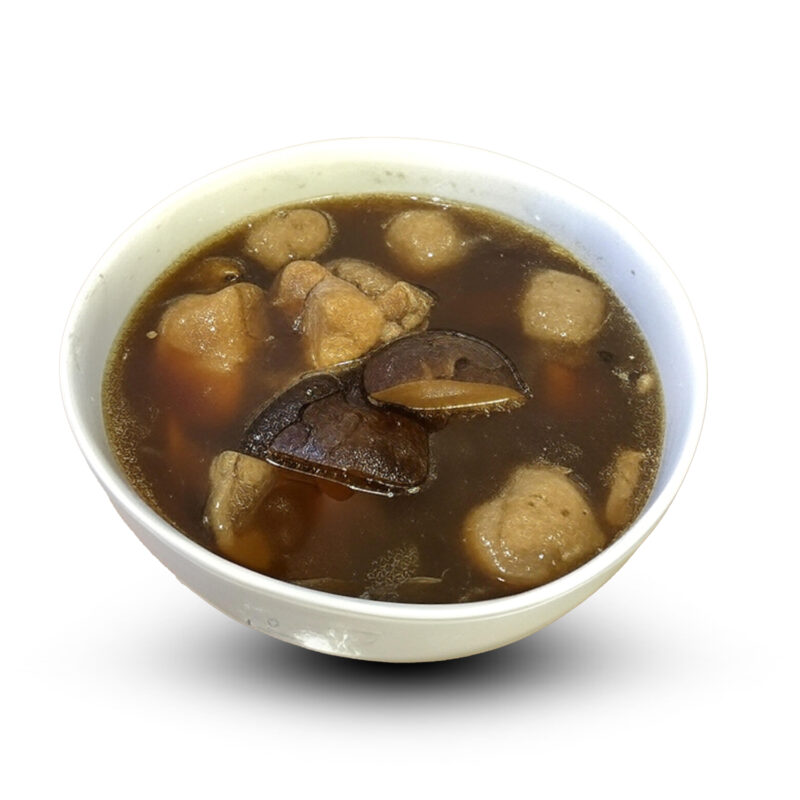
Bak Kut Teh, a humble yet deeply flavorful soup, is widely believed to have originated in Klang, Selangor, Malaysia.
In the early 20th century, a large number of Chinese immigrants arrived in Malaysia to work in ports, docks, tin mines, and rubber plantations. To provide laborers with a high-energy and nutritious breakfast, someone came up with the idea of simmering pork bones and meat with Chinese medicinal herbs and spices, serving it with rice or fried dough sticks. This became the earliest version of bak kut teh.
The term “bak kut” refers to pork and ribs, while “teh” (tea) does not refer to tea leaves in the soup but rather the strong tea traditionally served alongside it to help with digestion and cut through the richness.
How Bak Kut Teh Reached Every Malaysian Table
Bak kut teh was once mainly a breakfast for the Chinese community but eventually made its way into the dining tables of other ethnic groups.
Since Muslims in Malaysia do not consume pork, a variation called Chicken Bak Kut Teh emerged. This halal-friendly version replaces pork bones and meat with chicken bones and chicken meat, while retaining the same medicinal herbs and warming aroma. Today, chicken bak kut teh has become a popular healthy soup in markets and restaurants frequented by Muslim customers.
Regional Flavors of Bak Kut Teh
Bak kut teh’s birthplace is Klang, and as Chinese traders and workers moved, the dish spread across Malaysia—north to Penang and south to Singapore—adapting to local tastes and ingredients along the way:
- Klang (Selangor) – The original dark herbal soup, made with a generous amount of dark soy sauce, giving it a deep color and strong herbal aroma with a rich, robust taste.
- Penang – Brought from Klang, it retains the dark soup style with a similar flavor profile—rich herbal notes without a strong pepper taste.
- Singapore – The southern version is characterized by a peppery clear soup, with intense pepper heat and a slight spiciness that warms you instantly.
- Kuala Lumpur – A middle-ground style between dark and clear soups, with a balanced mix of herbal and savory flavors.
Common Ingredients in Bak Kut Teh
A typical traditional bak kut teh recipe includes:
- Pork ribs, pork belly, pork trotters, or offal (chicken version uses chicken bones and meat)
- Chinese medicinal herbs (codonopsis, polygonatum, angelica, goji berries, ligusticum)
- Spices (star anise, cinnamon, garlic)
- Seasonings (soy sauce, dark soy sauce, salt)
The taste is rich, with the aroma of herbs and garlic blending into a deep, comforting broth.
Why Street Hawkers Sell Bak Kut Teh
In the early days, bak kut teh was an affordable, easy-to-make breakfast soup for dock and labor workers. Ingredients were readily available, the soup base could be topped up with water while maintaining flavor, and it suited Malaysia’s love for hot soup in the morning with rice or fried dough. Naturally, it became a favorite dish for street hawkers.
Papa Chef’s Ready-to-Eat Bak Kut Teh Pack
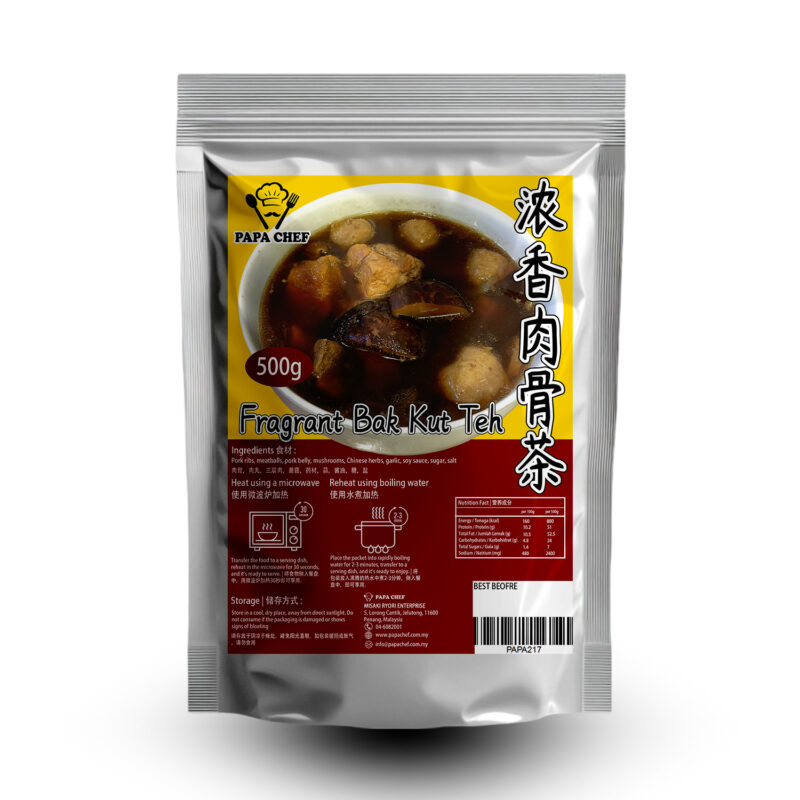
To allow more people to enjoy authentic Malaysian bak kut teh delicacy anytime, anywhere, Papa Chef used years of culinary experience combined with retort high-temperature sterilization technology to create the ready-to-eat bak kut teh pack and instant bak kut teh:
- Premium ingredients – Quality pork bones and authentic herbs for original taste.
- Traditional recipe – Precise simmering time and herb ratios for a rich broth.
- Convenient storage – Food-grade aluminum pouch vacuum-sealed, sterilized at 121°C, preservative-free, and shelf-stable for 12 months at room temperature.
- Quick serving – Heat for just 5 minutes and enjoy the true flavor of Klang.
In the future, Papa Chef also plans to launch a ready-to-eat chicken bak kut teh pack, providing a halal-friendly option for Muslim customers, bringing this century-old dish across more cultural boundaries.
Storage & Heating Instructions
- Storage – Keep at room temperature in a cool, dry place away from direct sunlight. Refrigerate after opening and consume within 2 days.
- Heating – Place the sealed pack in boiling water for 5 minutes, or pour into a pot and heat until boiling.